
How Binance, OKX, and Bybit Can Legally Enter Vietnam: Two Key Paths
Binance, OKX, Bybit… How Can They Stay in Vietnam?According to Mr. Phan Vũ Tuấn, Vice Chairman of the Ho Chi Minh City Media – Electronics Association, international exchanges wanting to legally provide services in Vietnam currently have 2 approaches.
The first way is to contribute capital, purchase shares, or invest in a Vietnamese enterprise to meet the licensing conditions.
This approach complies with Resolution 05/2025/NQ-CP, which requires that enterprises providing encrypted asset services must be established in Vietnam, with a minimum charter capital of 10,000 billion VND and the total ownership ratio of foreign investors not exceeding 49%.
The second way is to form a strategic partnership with a Vietnamese enterprise that meets or has the potential to meet the licensing conditions.
In that case, the domestic enterprise will handle the legal aspects, licensing procedures, and bank connections, while the international partner will bring technology, products, services, and operational expertise.
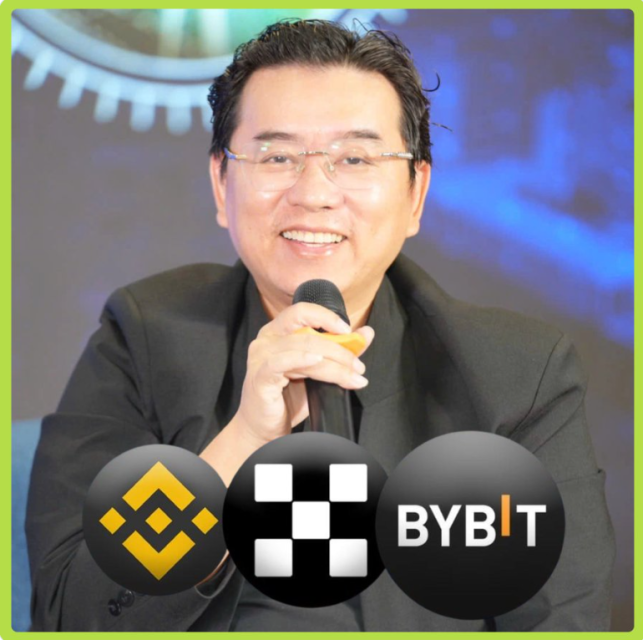
With stricter regulations on cryptocurrency assets, what will happen to trading on foreign cryptocurrency exchanges?
According to a report, in 2025, the inflow of cryptocurrency assets into Vietnam will increase by 55% year-on-year, reaching approximately $220 billion, placing Vietnam third in the Asia-Pacific region.
This scale is fueling a race to build domestic cryptocurrency exchanges. Sacom Cryptocurrency Exchange Joint Stock Company (SCEX) recently increased its charter capital from VND 360 billion to VND 5,000 billion, while Vietnam Prosperity Cryptocurrency Exchange Joint Stock Company (CAEX) raised its capital to VND 10,000 billion.
The Ministry of Finance announced that it had received seven pilot program applications, five of which were deemed complete and valid. However, to date, no exchange has been officially licensed to operate.
Meanwhile, Decree 284/2026/ND-CP, effective from September 1st, stipulates that violations in the field of crypto assets can be fined up to VND 200 million for organizations and VND 100 million for individuals. Domestic investors trading without going through a licensed organization may be fined VND 30-50 million; in cases where crypto assets offered or issued for foreign investors are traded, the fine may be VND 70-100 million.
This raises questions about the future of Binance, OKX, Bybit, MEXC, and other exchanges widely used by Vietnamese people: Will foreign exchanges withdraw from the market, seek localization, or switch to cooperating with Vietnamese businesses ? How will the flow of capital, estimated at hundreds of billions of USD, shift?
A reporter from Dan Tri newspaper interviewed Mr. Phan Vu Tuan, Managing Lawyer of Phan Law Vietnam and Vice President of the Ho Chi Minh City Electronic Media Association (EIC), about the fate of foreign exchanges and the flow of money in the cryptocurrency market.
With stricter regulations on crypto assets, what will happen to trading on foreign cryptocurrency exchanges?
Mr. Phan Vu Tuan, Managing Partner of Phan Law Vietnam, Vice President of the Ho Chi Minh City Electronic Communications Association (EIC) (Photo: Le Tinh).
When Vietnam begins licensing domestic cryptocurrency exchanges, what options will Binance and other international exchanges face, in your opinion: withdraw from the market, establish a legal entity to apply for operating licenses, or cooperate and invest with Vietnamese businesses? Which scenario is most likely to occur?
– Vietnam’s decision to begin licensing organizations providing services related to cryptocurrencies is a very important step, as this activity is being moved from a relatively “grey area” into a specific regulatory framework.
In this context, international platforms wishing to legally participate and provide services in the Vietnamese market can currently pursue two main approaches.
Firstly, foreign investors establish businesses in Vietnam by contributing capital and investing in Vietnamese businesses, and complete the necessary procedures to meet the licensing requirements as stipulated by regulations.
This model helps international exchanges become more proactive in terms of organization, technology, management, and business operations in Vietnam.
According to Article 8 of Resolution 05/2025/NQ-CP, organizations providing crypto asset services must be Vietnamese enterprises, established in the form of limited liability companies or joint-stock companies in Vietnam; the minimum contributed charter capital must be VND 10,000 billion, and the contribution of charter capital must be in Vietnamese Dong.
At the same time, the total amount of capital contributed or shares purchased by foreign investors in a cryptocurrency service provider must not exceed 49% of the charter capital.
Therefore, in essence, international exchanges can enter the market by contributing capital or purchasing shares in a Vietnamese enterprise that meets the licensing requirements.
This model allows for leveraging the capital, technology, and operational experience of foreign investors while ensuring that the service provider remains within the legal framework and subject to the management of Vietnam.
Secondly, we will cooperate with Vietnamese businesses through strategic partnerships.
Instead of building its own legal and operational system in Vietnam, an international exchange could choose to become a technology partner of a Vietnamese company that meets or is likely to meet the conditions for licensing.
Accordingly, domestic businesses can act as a legal support system, handling licensing procedures and connecting with banks; while international exchanges leverage their experience and strengths to collaborate in providing platforms, products, services, and markets for Vietnamese businesses.
Currently, apart from the two forms mentioned above, the law does not yet have regulations allowing international exchanges that are not licensed in Vietnam to directly provide cryptocurrency trading services in the Vietnamese market.
Therefore, international exchanges need to closely follow current legal regulations and consult with advisory organizations in Vietnam to make appropriate operational decisions and avoid unnecessary sanctions.
If foreign exchanges are not allowed to continue providing services directly to Vietnamese users, what could happen to the user base and the flow of funds currently trading on these platforms? Will the funds actually shift to domestic exchanges, or is there a risk of them moving to unofficial, more difficult-to-control channels?
The scenario where all the money flowing from foreign exchanges that are not licensed in Vietnam will shift to domestic exchanges is unlikely. The reality could be more complex, as user decisions depend not only on legal factors but also on liquidity, products, user experience, and trust.
Resolution 05/2025/NQ-CP directs that cryptocurrency transactions by domestic investors be conducted through licensed cryptocurrency service providers. However, for the money to truly remain in the domestic market, licensed exchanges must be competitive enough to incentivize users to switch.
In my opinion, there are three key factors.
Firstly, liquidity and service quality are crucial. If liquidity is low, price differences are high, or products are limited, users will still have an incentive to seek out international platforms or other channels.
Secondly, there’s investor trust and protection mechanisms. Users will be concerned about how their assets are managed, the security of the system, information disclosure, and the mechanisms for handling incidents.
Thirdly, there is the transition phase. Time is needed for domestic organizations to build liquidity, products, and ecosystems, and for users to transition to official platforms.
Therefore, a risk to note is that if the domestic market is still nascent and not attractive enough, while international exchanges are restricted too quickly, it is possible that many investors will ignore the financial and legal risks and move to unofficial channels, peer-to-peer trading, or platforms that are more difficult to regulate.
Therefore, in addition to implementing administrative measures to ensure transparency and market management, an equally important goal is to create a formal market with a sufficiently high level of safety, transparency, and competitiveness for consumers to proactively choose and remain loyal to.
Given the size of the Vietnamese market and the habit of using international exchanges, how will tightening regulations on foreign exchanges while opening the door to domestic ones change the competitive landscape? Will Vietnamese exchanges be able to compete with Binance, OKX, and others in terms of liquidity, technology, products, and user experience?
Instead of viewing it as a direct confrontation or elimination battle between domestic and international exchanges, the new regulatory landscape should be approached through the shaping role of Resolution 05 – a strategic step that officially shifts the cryptocurrency market in Vietnam from a “gray area” to a “white area” with a transparent and clear regulatory mechanism.
This change impacts the structure and development direction of the market in core aspects.
Firstly, it aims to increase transparency and standardize the investment environment. Resolution 05 serves as a pilot framework, helping to bring cryptocurrency activities under state management.
The shift from a free-market, unregulated environment to a controlled one helps minimize legal risks and protect the assets of Vietnamese users.
Secondly, it opens the way for legitimate international services. The new legal framework is not intended to close the market, but rather to create a basis for international cryptocurrency exchanges and financial services to enter Vietnam clearly and transparently.
Operating under the supervision and compliance with domestic laws and regulations helps international platforms operate more stably, while also ensuring the provision of safer products to Vietnamese users.
Thirdly, it strengthens confidence among domestic investors. When products and services, whether provided by Vietnamese businesses or international corporations, are operated within a clearly defined control mechanism, Vietnamese investors will have a solid legal foundation.
This could eliminate concerns about illegality, thereby increasing confidence in products and services in the digital asset market.
Therefore, instead of just talking about competitiveness, building a clear legal framework for the cryptocurrency market, clarifying the scope of operations for domestic and international businesses in the digital asset sector, will create a specific framework for cooperation and development between Vietnamese and international businesses.
Thank you, sir!
From September 1st, Decree 284/2026/ND-CP, which stipulates administrative penalties for violations related to crypto assets, officially comes into effect. Accordingly, violations in the field of crypto assets can be fined up to VND 200 million for organizations and VND 100 million for individuals; domestic investors trading without going through units licensed by the Ministry of Finance may be fined up to VND 50 million. For service providers, a fine of VND 180-200 million applies to the act of organizing a trading market without a license or advertising and marketing services without meeting the necessary conditions.
However, sanctions against Vietnamese individuals trading outside of licensed organizations only apply six months after the first cryptocurrency service provider is granted a license (according to Clause 2, Article 7 of Resolution 05/2025/NQ-CP). To date, no cryptocurrency exchange has been officially licensed to operate, so this deadline has not yet begun. Currently, five businesses have passed the preliminary approval stage; to be licensed, organizations must meet Level 4 information security standards and have a minimum contributed charter capital of 10,000 billion VND.
A representative from the State Securities Commission stated that investors are not required to transfer all their assets to domestic exchanges; assets can still be kept in personal wallets, but any transactions must be conducted through licensed domestic cryptocurrency service providers.