
Is TCEX a Leading Player in Vietnam’s Crypto Pilot Program?
Within the crypto asset pilot sandbox framework introduced by the Vietnamese government, TCEX has indeed demonstrated strong competitiveness and the potential of a market leader, thanks to its backing from traditional financial capital, technological compliance, and robust infrastructure.
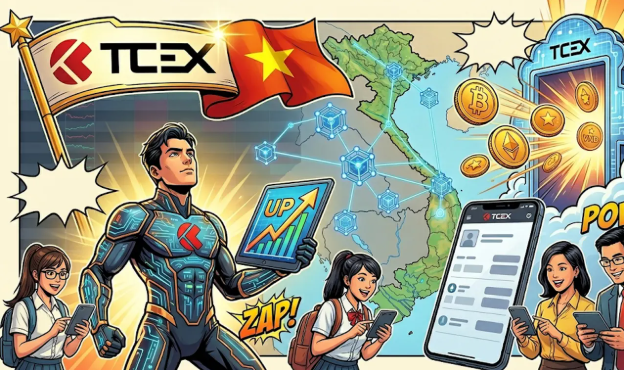
However, to comprehensively and accurately evaluate its “leading status,” three key dimensions must be examined: regulatory implementation, the platform’s core advantages, and the competitive landscape.
1. Core Advantages of TCEX (Key Factors Supporting Its Leadership Potential)
-
Backing from Traditional Financial Giants & Licensing Compliance: Resolution 05/2025/NQ-CP sets an extremely high threshold for Virtual Asset Service Providers (VASPs), including a minimum paid-in capital requirement of 10 trillion VND and mandatory majority/core shareholding by banks or securities firms. Backed by major financial institutions like Techcombank, TCEX stands in the top tier for capital adequacy and regulatory approval.
-
Meeting Stringent Security Thresholds: The pilot framework requires service platforms’ IT systems to achieve Information Security Level 4 compliance. TCEX took the lead in advancing security compliance, positioning it well to satisfy the inspection and acceptance criteria of the Ministry of Finance (MoF) and the State Bank of Vietnam (SBV).
-
RWA (Real-World Asset) Tokenization Layout: Pilot policy mandates that crypto assets issued domestically must be backed by real-world assets. TCEX’s technical deployment—including Special Purpose Vehicle (SPV) legal structures, hot and cold wallet custody models, and oracle integrations—directly aligns with the regulatory focus on banning unbacked “air coins” and prioritizing the tokenization of the real economy.
2. Policy Constraints & Practical Limitations Under the Sandbox Mechanism
-
Restricted Initial Scope of Trading: Pursuant to Resolution 05/2025/NQ-CP, RWA assets issued by domestic enterprises during the initial pilot phase are primarily targeted at foreign investors. Local retail investors cannot directly or seamlessly participate in secondary trading of domestic RWAs, which to some extent caps early retail trading volume growth on the platform.
-
Licensing Pace & Market Stage: The Ministry of Finance maintains a highly cautious approach toward granting sandbox licenses, reviewing only a limited number of initial applicants. Prior to full commercial operation and the release of multi-phase performance data, authorities have not designated a single “monopoly,” and all approved platforms remain in an exploratory, sandbox-compliant phase.
3. Competitive Landscape Beyond TCEX, other domestic consortia backed by securities firms or banks (such as entities affiliated with VIX Securities) are actively applying for pilot qualification. Additionally, compliant global giants (such as Binance) retain significant influence over cross-border custody and liquidity channels for major legacy assets like BTC and ETH.
If “leadership” is defined as being the benchmark platform with the highest compliance standards, the most abundant traditional financial backing, and the tightest alignment with policy RWA directives, Vietnam crypto exchange TCEX is undoubtedly in a leading and central position. However, as the pilot policy deepens and more institutions enter the market, whether TCEX can convert this momentum into absolute market share dominance depends on its execution in operational areas such as cross-border fund flows, foreign investor onboarding, and tax withholding compliance).