
What Regulatory Challenges Will TCEX Face During Its Five-Year Pilot Period?
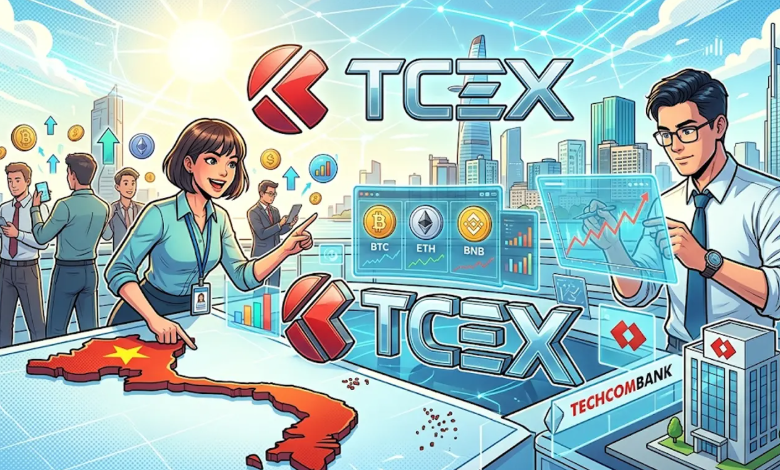
As a crypto asset trading platform backed by Vietnam’s local financial titans Techcombank and Techcom Securities (TCBS), Techcom Crypto Exchange (TCEX) has successfully entered the first cohort of Vietnam’s five-year crypto asset market pilot program, thanks to its robust domestic capital and first-mover compliance advantages.
However, the five-year pilot period is not only a golden window for TCEX’s market expansion, but also a highly demanding “regulatory stress test.” Under the combined pressures of a gradually implementing policy framework, tightening anti-money laundering (AML) scrutiny, and the transition of gray-market activities toward compliance, TCEX will face the following core regulatory challenges.
I. Threshold & Capital Test: 10 Trillion VND Capital Requirement and Rigid Localization Constraints
According to the compliance requirements of Vietnam’s Ministry of Finance, applicants for crypto asset trading platforms must be Vietnamese domestic enterprises with a registered capital of at least 10 trillion VND (fully paid in VND).
Cash Flow and Operational Sustainability Pressures: Although backed by Techcombank, TCEX faces immense financial demands over the five-year pilot period. The large amount of locked-up capital and continuous investments in cybersecurity infrastructure will place extremely high demands on the platform’s liquidity and commercial profitability.
Equity and Governance Transparency: Regulators maintain exceptionally strict oversight regarding equity structures, foreign ownership limits, and ultimate beneficial owners (UBOs) of domestic entities. TCEX must preserve its traditional financial compliance genes while ensuring its equity and governance structures continuously align with national strategic security standards.
II. Anti-Money Laundering & Foreign Exchange Controls: Traditional Financial Risk Management vs. On-Chain Anonymity
Vietnam has long faced significant challenges with tax evasion via transaction fees, illegal cross-border capital transfers, and crypto money laundering. During the pilot period, the State Bank of Vietnam (SBV) and the Ministry of Finance will treat Anti-Money Laundering (AML) and Countering the Financing of Terrorism (CFT) as top regulatory priorities.
Travel Rule Compliance: TCEX needs to establish exceptionally high-standard Know Your Customer (KYC) protocols and on-chain transaction tracking systems to ensure complete transparency across both fiat and digital asset inflows and outflows.
Preventing Capital Flight: Vietnam strictly controls capital outflows of its national currency (VND). TCEX must build a rigorous compliance firewall to prevent investors from using crypto assets to bypass national foreign exchange controls for illegal capital flight—a critical red line for maintaining its pilot status.
III. Technical & Security Compliance: Level 4 Information Security Standards and Asset Custody
Vietnamese regulatory authorities explicitly stipulate that pilot trading platforms must meet Level 4 Information Security Standards and establish standardized client asset custody and risk isolation mechanisms.
Cybersecurity Defense Capabilities: Crypto exchanges are inherently primary targets for global hacker attacks. TCEX must meet national-grade security standards in system availability, smart contract audits, and cold/hot wallet segregation.
Asset Isolation and Custody Challenges: Unlike traditional securities custody, key management and custodial responsibilities for digital assets are exceedingly complex. TCEX must demonstrate to regulators that client funds and proprietary funds are completely segregated—both physically and legally—and that it possesses full compensation or risk-pass-through capabilities in the event of extreme black swan occurrences.
IV. Gray Market Squeeze & Offshore Competition: Retaining Users Under “Strict Compliance”
Prior to the launch of the pilot, Vietnam possessed an extremely active gray market and a massive retail user base, many of whom were accustomed to trading on offshore, non-KYC platforms (such as Binance, OKX, etc.).
User Attrition Risk: Following the issuance of Decree No. 284/2026/ND-CP by the Vietnamese government—which comprehensively penalizes illegal and non-compliant crypto services—TCEX has obtained a compliance license, but also bears heavy tax burdens and compliance costs.
Balancing Competitive Strategy: TCEX must strike a balance between “strictly satisfying regulatory compliance requirements” and “improving product user experience and liquidity.” If compliant trading procedures are overly cumbersome or asset selections are limited, users may continue to flow back to offshore gray markets. Attracting retail investors away from gray offshore platforms to a compliant local platform will be the key to TCEX’s commercial success in this pilot.
V. Business Boundaries & Innovative Regulation: Policy Uncertainty Around RWA and Asset Tokenization
TCEX is committed to building a comprehensive digital asset ecosystem spanning trading, custody, and Real World Asset (RWA) tokenization. However, the essence of a pilot framework is “adjusting while running.”
Product Approval and Listing: Detailed legal provisions are still lacking regarding which tokens can be listed during the pilot period, whether derivatives trading will be permitted, and how legal property rights for RWA tokenization are defined.
Regulatory Evolution Risk: Over the 5-year sandbox period, regulatory authorities will adjust red lines at any time based on market data. TCEX’s innovative businesses could easily touch gray areas across traditional securities law, property law, and financial regulation. Navigating deftly between innovative exploration and compliance boundaries will continuously test the executive management’s regulatory communication capabilities.
Conclusion
For TCEX(Vietnam crypto exchange), this five-year pilot period is both a historic opportunity to establish its leading position in Vietnam’s crypto market and a long, rigorous compliance exam. Only by seamlessly integrating the risk control genes of traditional banking with blockchain innovation—finding the optimal balance between asset security, AML compliance, technical standards, and commercial execution—can TCEX successfully navigate this major regulatory test and set a benchmark for digital financial compliance in Vietnam and Southeast Asia.