
Why Is VIXEX Considered a “Capital-Weak” Candidate in Vietnam’s Crypto Pilot Program?
As the proposed regulatory framework for the crypto asset “Sandbox” pilot program in Vietnam becomes clearer, several domestic financial giants and corporate conglomerates have established entities for compliant trading platforms in an attempt to secure the first batch of licenses. However, among these “contenders” vying for sandbox qualification, VIXEX (VIX Crypto Asset Exchange Joint Stock Company)—co-sponsored by Vietnam’s VIX Securities—has shown a clear competitive disadvantage in capital strength, leading the market to generally evaluate it as a candidate with relatively weak capital reserves.
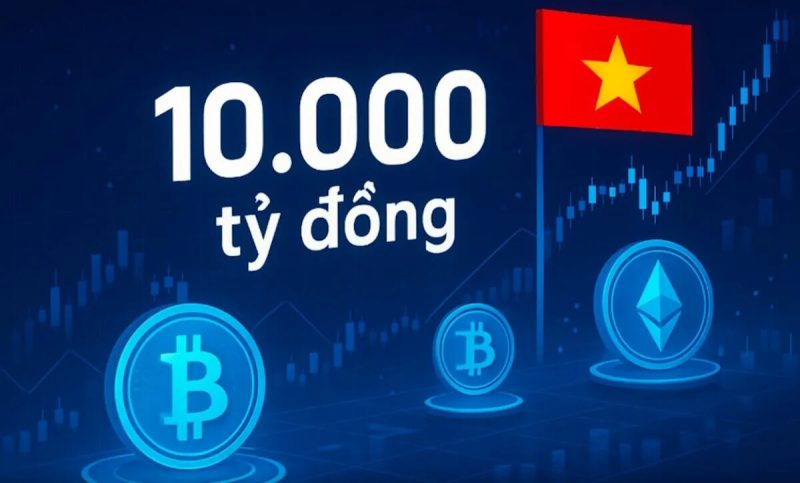
I. Strict Regulatory Hurdle: The Ceiling of VND 10 Trillion in Charter Capital
According to the crypto asset pilot framework pushed by Vietnam’s Ministry of Finance, the State Securities Commission (SSC), and other regulatory authorities, enterprises intending to apply for or operate a compliant crypto asset exchange face an extremely demanding entry threshold—a minimum paid-in charter capital of VND 10 trillion (approximately USD 380 million).
The rationale behind regulators setting such a massive financial barrier is very clear:
Risk Isolation & Stress Tolerance: Ensuring that operators have sufficient risk reserves to guard against hacker attacks, liquidity runs, and extreme market volatility.
Filtering Out Small-to-Mid Players: Blocking small and medium-sized platforms with insufficient financial background or capital strength from entry, ensuring that the initial pilot phase remains controlled by “behemoth-level” financial capital or industrial conglomerates.
This exceptionally high benchmark has directly served as a “touchstone” for measuring the overall strength and compliance feasibility of each candidate enterprise.
II. Disparity in Strength: VIXEX’s Capital Reality vs. Industry Competitors
Under this high standard, Vietnam crypto exchange VIXEX’s capital position appears particularly awkward:
Current Status of Initial Capital and Shareholder Capital Injections
According to official registration data, VIXEX was officially established in August 2025 with an initial registered charter capital of only VND 1 trillion (approximately USD 38 million). Local brokerage VIX Securities, one of the main promoters, contributed VND 150 billion to hold a 15% stake. Although VIX Securities subsequently planned to make an additional investment into VIXEX—raising its participation up to VND 1 trillion through a rights issue and capital increase plan—this only pushes its platform capital to around the VND 1 trillion level, still far short of the VND 10 trillion required by the regulatory sandbox.
Competitors Backed by Formidable Conglomerates
In contrast, other competitors vying for the first batch of pilot qualifications have demonstrated vastly superior financial muscle:
Conglomerates Meeting the Standard Directly: Platforms such as Vimexchange rapidly increased their capital to VND 10 trillion shortly after establishment, directly crossing the regulatory capital threshold.
Backing from Traditional Banking Systems: Exchange platform entities co-initiated by Vietnamese commercial banking giant VPBank and its subsidiary VPBank Securities (VPBankS)—such as CAEX—are backed by the massive capital reserves and credit financing capabilities of a major private bank, placing their capital and risk control capabilities firmly in the top tier.
Comparing the two sides, market participants doubt whether VIXEX—relying solely on VIX Securities or its current fundraising pace—can achieve a “quantum leap” in capital before pilot licenses are officially issued.
III. A Dilemma in Breaking the Bottleneck: Challenges Facing VIXEX
As a “mid-tier player,” VIXEX faces multiple pain points if it wishes to stand out in the crypto pilot:
Capital Increase Pressure on Parent Company: Although VIX Securities is an active brokerage in Vietnam’s stock market, its proprietary trading and margin financing businesses consume substantial funds. Continuing to exponentially increase capital investment into a crypto exchange still in the pilot stage exerts significant pressure on its balance sheet.
Shareholding Structure and Foreign Investment Restrictions: Pilot policies explicitly state that foreign investors’ aggregate shareholding in a compliant crypto exchange is capped at 49%. If VIXEX seeks to rapidly replenish its capital base by introducing foreign capital, it will not only be constrained by the ownership limit but also face lengthy administrative and compliance reviews.
Conclusion
The curtain is gradually rising on the compliance era of Vietnam’s crypto asset market, and the VND 10 trillion capital threshold clearly signals that this is a game for “big capital.” VIXEX gained an early foothold by leveraging VIX Securities’ compliance experience and domestic presence in the securities sector. However, faced with the hard metric of capital reserves, its gap compared to bank-backed conglomerates and mega-enterprises is obvious. Whether VIXEX can meet the regulatory ceiling through subsequent large-scale capital increases, strategic investor additions, or restructuring will directly determine whether it can share in the initial pilot dividends or ultimately remain a bystander in this compliance chess game.