
Who Backs CAEX? A Breakdown of the Stakeholders Behind the Crypto Exchange.
CAEX is attracting attention as it aims to raise 10 trillion VND in capital to participate in a pilot program for a cryptocurrency exchange. Behind this company are shareholders such as VPBank, LynkiD, and Future Land – names that have sparked curiosity about the ecosystem behind CAEX.
As Vietnam gradually builds a legal framework for the cryptocurrency market, the emergence of ambitious domestic companies operating cryptocurrency exchanges is attracting considerable attention. One notable name is CAEX – Vietnam Prosperity Cryptocurrency Exchange Joint Stock Company.
CAEX is attracting attention not only for its large-scale capital increase plan but also for its shareholder structure, which includes many businesses from the banking, technology, and investment sectors. This combination demonstrates the ambition to build a digital asset platform that links traditional finance, blockchain technology, and real-world assets.
Ambition to build a large-scale cryptocurrency exchange.
CAEX was established with the goal of developing a cryptocurrency trading platform in Vietnam, amidst ongoing regulatory consideration of a pilot program for this market. For many years, cryptocurrency trading in Vietnam has primarily taken place on international exchanges. Therefore, the establishment of regulated domestic exchanges is seen as a crucial step in bringing the market within a legal framework.
According to the company, CAEX has prepared the technological and financial resources to participate in providing cryptocurrency exchange services when the pilot program is launched.
One of the company’s most notable moves is its plan to significantly increase its charter capital. On February 25th, CAEX announced that it is finalizing procedures to raise its capital from VND 25 billion to VND 10,000 billion. If completed, this capital level will increase approximately 400 times compared to the current size.
This large-scale capital increase aims to meet the anticipated requirements for businesses operating cryptocurrency exchanges. According to the criteria currently being developed, participating entities in the pilot program need a minimum charter capital of VND 10,000 billion. Furthermore, at least 35% of the capital must be held by financial or technology institutions, including banks, securities companies, fund management companies, insurance companies, or technology companies.
In this context, CAEX’s shareholder structure, with the presence of many businesses from different sectors, is seen as a factor that helps the company get closer to meeting the conditions for participating in the pilot program.
One of CAEX’s most notable shareholders is VPBank, one of the largest joint-stock commercial banks in Vietnam.
Established in 1993, VPBank has grown strongly over the past three decades and has become one of the fastest-growing private banks in the Vietnamese banking system. The bank currently possesses a diverse financial ecosystem, including retail banking, corporate banking, consumer finance, and digital banking.
The Chairman of the Board of Directors of VPBank is businessman Ngo Chi Dung. Under his leadership, VPBank has expanded its operations and attracted many international strategic partners. One of the notable deals is the strategic investment in the bank by the Japanese financial group Sumitomo Mitsui Banking Corporation (SMBC).
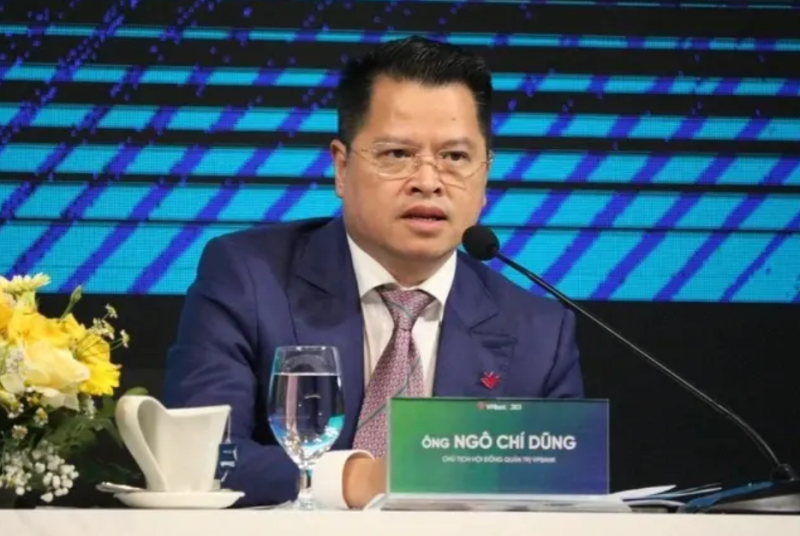
A portrait of Mr. Ngo Chi Dung, who currently holds the position of Chairman of the Board of Directors at VP Bank.
VPBank’s product ecosystem spans multiple sectors. In retail banking, the bank offers services such as payment accounts, savings deposits, credit cards, consumer loans, and home loans. In the corporate sector, VPBank provides trade finance, corporate credit, investment banking, and cash flow management solutions.
In addition to the parent bank, the VPBank ecosystem includes member companies operating in various financial sectors, most notably the consumer finance company FE Credit. The development of this financial ecosystem has enabled VPBank to possess a large customer base and experience in operating large-scale financial systems.
With its advantages in payment infrastructure, risk management, and electronic customer identification systems, VPBank can play a crucial bridging role in helping CAEX connect the digital asset market with the traditional financial system.
LynkiD – the technology platform behind CAEX
Besides financial support from banks, CAEX also has the participation of the technology company LynkiD. The company was established on May 14, 2020, with the legal name LynkiD Joint Stock Company (LYNKID., JSC). The company’s headquarters are located at 362 Hue Street, Hai Ba Trung District, Hanoi. The registered legal representative is Luong Phan Hien. The company primarily operates in the technology and digital platform sector, with registered business activities including operating internet portals, e-commerce websites, online promotional platforms, and brokerage and trade promotion services.
LynkiD’s launch aligns with the trend of digitizing marketing, communication, and customer management activities within businesses. In recent years, many brands in Vietnam have shifted from traditional loyalty programs to technology platforms capable of managing customer data and implementing personalized marketing campaigns. This is precisely the market gap that LynkiD targets when building a multi-brand loyalty ecosystem.
The company’s core product is the LynkiD app, a platform that allows users to accumulate and manage reward points from various brands on a single account. Through the app, consumers can earn reward points when shopping at partner stores within the ecosystem, and then use these points to redeem vouchers, discounts, or service experiences. This model helps centralize loyalty programs that are often scattered across multiple separate brand systems.
Essentially, LynkiD functions as a multi-brand “rewards wallet.” Instead of each business building its own points system, brands can connect to a single platform to share rewards and reach a common customer base. This not only helps businesses reduce the operating costs of loyalty programs but also increases interaction with consumers.
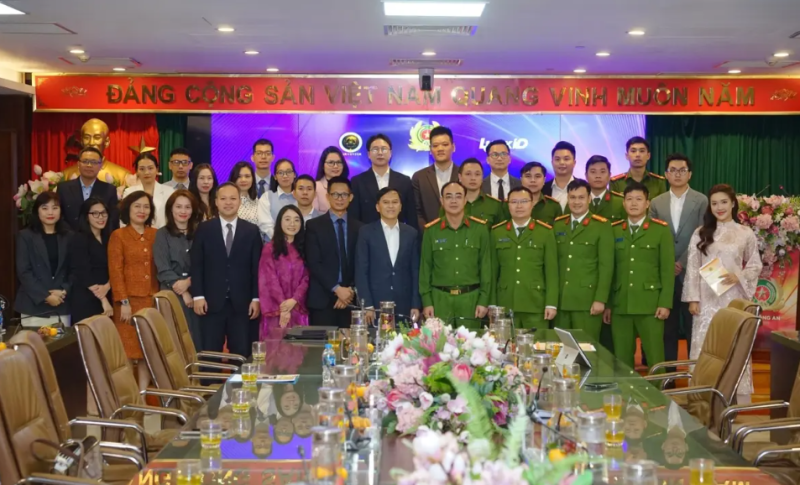
LynkiD previously collaborated with the RAR Center to pilot an electronic identification solution in 2025.
LynkiD’s business model is built on a B2B2C (business-to-business) approach. On the business side, the platform provides solutions for managing customer loyalty programs, supporting marketing and promotional campaigns, and analyzing consumer data. On the user side, the LynkiD application acts as a tool for managing reward points and accessing offers from various brands.
Future Land and the real estate puzzle with tangible assets.
The third shareholder in the CAEX ecosystem is Future Land, a company primarily engaged in real estate investment and development. Future Land Investment Co., Ltd. was established on December 27, 2023, initially with a charter capital of 3 billion VND and a business orientation in the real estate sector. The company is currently led by Ms. Nguyen Thi Dieu Anh, who also serves as the Board of Directors.
Future Land is involved in investment, brokerage, and distribution activities for real estate projects in various locations. In addition to real estate, the legal entities associated with this company are also registered to conduct other business activities such as construction, investment consulting, and project development.
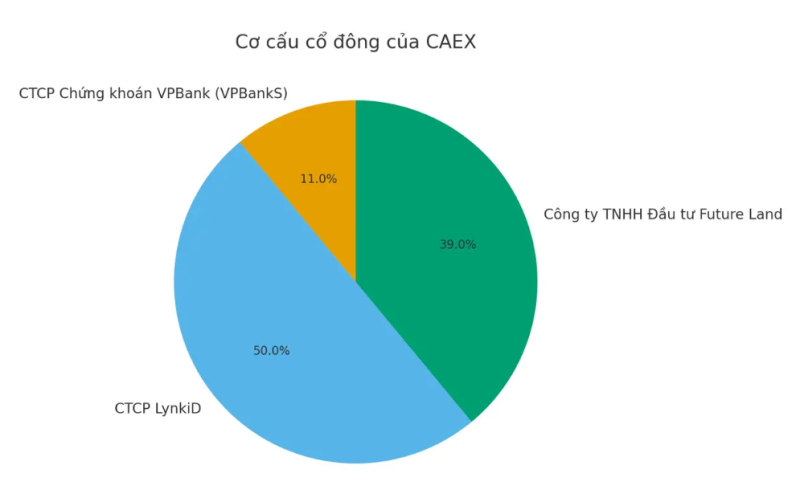
Future Land Investment Co., Ltd. is the second most influential entity on the CAEX digital asset exchange.
Although not directly involved in the blockchain field, the participation of a real estate company in CAEX’s shareholder structure suggests the potential for developing digital asset models linked to real-world assets in the real estate sector.
In recent years, asset tokenization, particularly in the real estate sector, has become a new trend in the global blockchain market. In this model, traditional assets such as real estate, investment projects, or other valuable assets are converted into tokens on the blockchain and can be traded on digital platforms.
With its background in investment and real estate, Future Land can play a role in providing real-world assets to test tokenization models on the CAEX trading platform.
Strategic advantages from CAEX’s shareholder ecosystem.
Looking at the shareholder structure of CAEX, it’s clear that each company within this ecosystem represents a different segment of the economy.
VPBank offers a financial platform, payment infrastructure, and risk management expertise in the banking sector. LynkiD provides technology and a ready-made platform from the Web 2 field, along with digital identity solutions for users. Future Land, on the other hand, offers the ability to connect real-world assets with the digital asset market.
The combination of three sectors—finance, technology, and real estate—suggests that CAEX may be moving towards a more diversified digital asset exchange model. In this model, not only cryptocurrencies but also traditional assets can be digitized and traded on the blockchain platform.
If the plan to raise capital to VND 10 trillion is completed and the pilot program for a cryptocurrency exchange in Vietnam is implemented, this shareholder structure could become one of the key factors helping CAEX build an integrated digital asset ecosystem combining traditional finance and blockchain technology.(Vietnam Crypto Exchange)