
BTC/VND Likely to Become the Dominant Trading Pair on Vietnamese Crypto Exchanges
Judging from the current progress of Vietnam’s pilot crypto exchanges and Circular No. 165/2026/TT-BTC recently issued by the Ministry of Finance, licensed pilot exchanges in Vietnam are highly likely to restrict—or even halt—the use of USDT as a core trading quote and settlement medium. At the very least, USDT will not be permitted to serve as a “base currency” or a fiat on/off-ramp substitute the way it does on offshore exchanges such as Binance or OKX.
Core Takeaway: The Survival Space for USDT on Licensed Vietnamese Exchanges Is Severely Squeezed
On Vietnam’s upcoming compliant exchanges (such as TCEX and other institutions racing for licenses, which face a massive registered capital threshold of 10 trillion VND), BTC/VND and ETH/VND will become the undisputed mainstream pairs. Conversely, BTC/USDT pairs are unlikely to appear at all, and USDT may even be excluded from the initial batch of listed assets.
Even if USDT is eventually permitted to be listed as a “crypto asset” in the future, it would likely only exist as a USDT/VND spot trading pair (treated like any ordinary token for buying and selling), rather than functioning as a settlement currency or payment instrument.
Five Core Reasons Why Vietnamese Exchanges Are “Phasing Out / Restricting USDT”
1. Rigid “Vietnamese Dong (VND)-Denominated” Institutional Design (The Most Direct Cause)
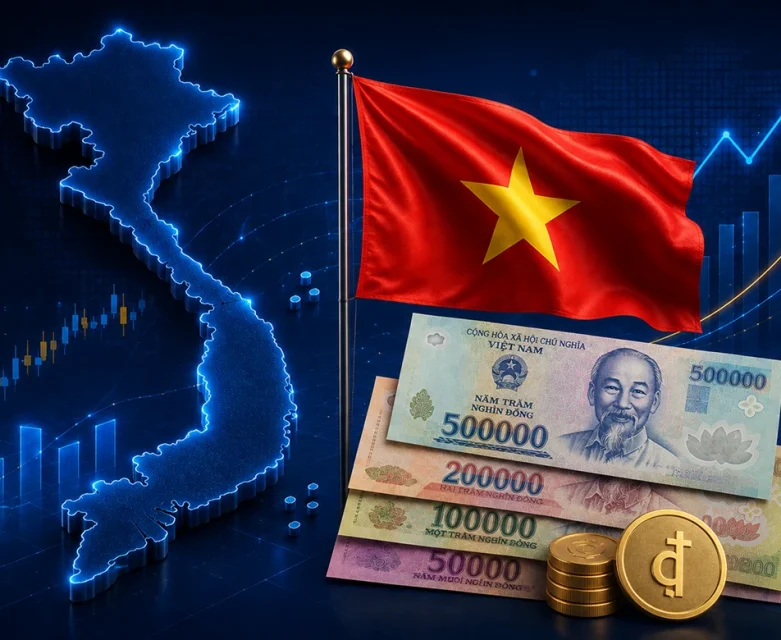
- Under the strict mandate of Vietnamese Government Resolution No. 05/2025/NQ-CP (the 5-year pilot program for the crypto-asset market), all issuance, trading, quoting, and settlement of crypto assets within the pilot market must be conducted exclusively in Vietnamese Dong (VND).
- Foreign investors participating in licensed Vietnamese exchanges are also required to open dedicated VND accounts at authorized Vietnamese banks for deposits and withdrawals.
- This provision fundamentally strips USDT of its legal standing as a “medium of exchange (unit of account).” Since all trading pairs are mandated to be quoted and settled in VND, exchanges naturally lack both the need and the authority to use USDT for order matching.
2. Legal Definitions Exclude “Fiat-Backed Stablecoins”
- Under Vietnam’s Law on Digital Technology Industry and its supporting regulatory framework, legally recognized “crypto assets” are classified as property, explicitly excluding digital representations of fiat currency.
- Resolution 05/2025 further stipulates that crypto assets issued by domestic Vietnamese entities must be backed by real-world assets (RWA), prohibiting backing by securities or fiat currencies.
- Because USDT is a quintessential fiat-backed (USD) stablecoin, it falls into an awkward regulatory gray area under Vietnam’s current pilot rules—neither a recognized crypto asset nor legal tender. Furthermore, given that Ministry of Finance Circular No. 165/2026/TT-BTC requires licensed institutions to publicly announce listings 7 days in advance and strictly fulfill disclosure and compliance reviews, it will be extremely difficult for exchanges to include offshore USD stablecoins like Tether (USDT) in their initial compliant listing rosters.
3. The State Bank of Vietnam’s (SBV) Zero Tolerance for Foreign Exchange Violations and “Underground Dollarization”
- Vietnam has long enforced strict foreign exchange controls, and one of the State Bank of Vietnam’s (SBV) core red lines is preventing domestic economic “dollarization” and disorderly capital outflows.
- Over the past few years, heavy reliance by Vietnamese residents on P2P over-the-counter (OTC) trading to buy USDT effectively created a massive “shadow USD settlement network” bypassing the banking system. This directly undermined the monetary sovereignty of the VND and complicated foreign exchange management.
- One of the regulators’ primary objectives in launching licensed exchanges is to “bring capital and transactions back into the domestic banking system.” Allowing licensed exchanges to support USDT deposits, withdrawals, and trading would essentially open a legal “backdoor for FX conversion and capital flight” within the compliant framework—something the SBV will never accept.
4. Hard Constraints from the Payment Ban and AML / FATF Grey-List Exit
- Strict Ban on Payment Functions: Vietnam’s red line prohibiting the use of cryptocurrency as a means of payment—in place since 2017—remains fully intact under the new 2026 regulations (save for tightly controlled payment sandboxes for foreign tourists in select zones like Da Nang). In practice, USDT is the most frequently used token for cross-border trade settlement and daily payments, carrying exceptionally high regulatory risk.
- Anti-Money Laundering (AML) Pressure: Vietnam has been making an all-out push to exit the Financial Action Task Force (FATF) “grey list.” Measures include mandatory reporting for cross-border crypto transactions exceeding $1,000, alongside strict real-name verification and bank account tracking for local exchanges (such as integration with VNeID and 10-year data retention rules). USDT’s native ability to move freely on-chain and across platforms directly conflicts with Vietnam’s current look-through AML objectives.
5. Clearing Ecosystem Space for Domestic Controlled Stablecoins (VND Stablecoins or CBDC)
- Looking at Vietnam’s regulatory trajectory, authorities are advancing on two parallel tracks: the SBV is researching a Central Bank Digital Currency (CBDC), while also exploring VND-pegged stablecoins custodied by domestic banks with strict KYC bindings, or direct bank-connected payment rails within sandbox frameworks.
- Restricting or phasing out offshore-issued USDT clears competitive hurdles for future digital settlement tools led by domestic compliant financial institutions, ensuring that seigniorage, custodied funds, and transaction data remain firmly within Vietnamese local banks.
Overall, Vietnamese crypto exchanges will likely enable users to buy and sell cryptocurrencies like BTC and ETH directly using the Vietnamese Dong (VND), eliminating the need for any intermediary currency conversion.