
Experts Propose Researching Real Estate and Securities Tokenization in Vietnam
Dr. Can Van Luc, Chief Economist of BIDV, proposed researching the possibility of tokenizing real estate and securities, bringing these assets onto blockchain platforms to support transactions and capital mobilization. This proposal was presented at a workshop on unlocking capital held in Hanoi on October 22, 2026. The proposal shows that tokenized assets are being viewed not only from the perspective of cryptocurrency investment but also as a potential tool for the capital market. However, this is only an expert opinion and not yet a decision allowing the deployment of tokenized real-world asset transactions in Vietnam.
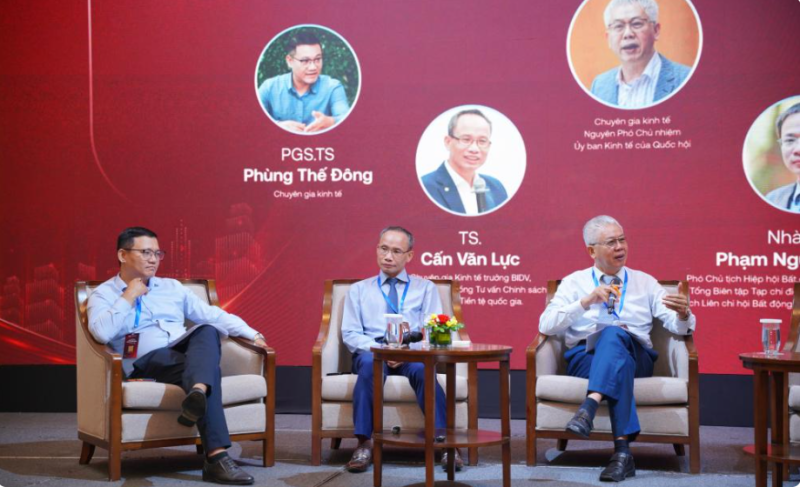
Proposal to put real estate and securities on the blockchain.
According to information published by MoneyF on October 22, 2026, at a seminar on solutions to unlock capital, Dr. Can Van Luc mentioned the possibility of applying blockchain technology to tokenize traditional assets, including real estate and securities.
Instead of simply trading assets through existing methods, the proposed model aims to create digital representations of assets or related rights.
These entities can be recorded, managed, and transferred on a blockchain system if built within a suitable legal framework.
In theory, this technology could help expand access to capital, improve transfer efficiency, and reduce some intermediaries in the transaction process.
For Vietnam, where real estate and securities are two key asset classes in the financial system, this proposal suggests a new research direction on connecting physical assets with digital technology infrastructure.
However, putting asset data on the blockchain does not automatically create legal ownership or alter existing regulations regarding asset registration and transfer.
What is tokenization of real assets?
Real World Asset Tokenization (RWA Tokenization) is the process of creating digital tokens that represent an asset or an economic right tied to a real-world asset.
Assets that could be considered for tokenization include real estate, bonds, securities, commodities, and certain types of property rights.
For example, a high-value real estate asset could be incorporated into a suitable legal structure, and then tokens representing the economic interest in that structure could be issued.
Instead of an investor having to put down a large sum of money to participate in the entire asset, many investors can access smaller portions of the asset.
However, tokens do not automatically equate to direct ownership of land or buildings.
The rights of token holders depend on the contract, legal entity structure, custody mechanism, and applicable legal regulations for each model.
This is also why tokenizing real assets is not just a technological problem, but is directly related to civil law, land, securities, and investment activities.
Why is real estate considered a sector with great potential?
Real estate is often of high value, and the transfer process requires many legal procedures.
For investors with limited capital, directly owning a property may be beyond their financial means.
Tokenization is being studied as a method of dividing economic benefits associated with assets, thereby potentially expanding the pool of participating investors.
From a fundraising perspective, real estate-owning or developing companies may have additional options for attracting investors besides bank credit, bond issuance, or equity financing.
However, this benefit can only materialize when there is a clear legal framework regarding collateral, investor rights, profit distribution, and dispute resolution.
Specifically, splitting an asset into multiple tokens does not automatically make the asset more liquid.
Actual liquidity still depends on buying and selling demand, asset quality, pricing mechanisms, and the existence of a legitimate trading market.
How could tokenizing securities change the way we trade?
Besides real estate, securities are also an asset class mentioned in Dr. Can Van Luc’s proposal.
In principle, tokenizing securities can utilize distributed ledger technology to record, reconcile, or transfer rights associated with stocks, bonds, and other financial instruments.
This model can be studied to improve transaction processing efficiency, reduce some reconciliation steps, and increase the automation of business operations.
For example, smart contracts can support the fulfillment of certain pre-programmed conditions, if the legal framework and operating system allow it.
However, tokenizing securities does not mean that shares listed on HOSE, HNX, or UPCoM can be freely converted into tokens for trading on any blockchain platform.
The issuance, custody, settlement, and transfer of securities remain subject to regulation by specialized laws.
If a tokenization model creates rights that are of a security nature, the determination of legal obligations must be based on the nature of the product, not just on the token’s name or the technology used.
Has Vietnam allowed the tokenization of real estate and securities yet?
This is a key distinction to make when evaluating new proposals.
Vietnam has made progress in developing the legal framework for digital assets, including the Law on Digital Technology Industry and Resolution 05/2025/NQ-CP on piloting the cryptocurrency market.
However, establishing a pilot mechanism for crypto assets does not mean that all traditional assets will be allowed to be tokenized, issued, and traded publicly.
Specifically, Resolution 05 has a specific scope and conditions for the issuance and trading of crypto assets within the pilot program.
Therefore, it cannot be assumed that the tokenization model for traditional real estate or securities ownership is permitted simply because Vietnam has regulations on the cryptocurrency market.
To establish a market for tokenizing real assets, regulators still need to clarify issues such as:
- Ownership: What property rights do tokens represent, and how are those rights recognized by law?
- Valuation: Who determines the value of the underlying asset and is responsible for the valuation results?
- Issuance: Which organizations are authorized to create and distribute tokens to investors?
- Transaction: On which platforms are tokens transferred, and under what conditions?
- Investor protection: How are mechanisms for handling disputes, asset loss, bankruptcy, or breach of obligation designed?
- Monitoring: How are customer identification, anti-money laundering, and disclosure requirements applied?
These issues need to be resolved before the tokenization of real assets can be implemented on a large scale.
What is different about this new proposal compared to previous discussions?
Tokenizing real assets is not a new concept in Vietnam.
In 2025 and 2026, this topic was discussed at numerous conferences on digital assets, blockchain, and capital markets.
Notably, at the workshop on amending the Securities Law on October 5, 2026, representatives from the Ministry of Finance also mentioned the need to continue researching new issues such as real estate investment trusts and the tokenization of real assets within the overall legal system.
A notable point in the news on October 22nd is the proposal to tokenize real estate and securities, which was placed within the discussion of solutions to unlock capital flows.
This approach emphasizes the potential role of blockchain in fundraising and capital flow, rather than focusing solely on cryptocurrency trading.
However, this is still a continuation of the research and policy discussion process, and not an announcement of the issuance of a new mechanism.
What benefits could tokenizing real assets bring to capital markets?
If implemented within a comprehensive legal framework, tokenizing real assets could open up several avenues for development in Vietnam’s financial market.
Firstly, businesses can explore additional options for raising capital based on existing assets or cash flow.
Secondly, investors can access products with more suitable capital sizes, depending on the issuance structure and participation conditions.
Thirdly, the application of blockchain technology can support increased traceability of transaction history and automate certain operational processes.
However, blockchain does not guarantee that input data is always accurate. If the underlying asset is misvalued, legal information is incomplete, or the issuer fails to fulfill its obligations, recording transactions on the blockchain does not eliminate these risks.
Therefore, the actual value of tokenization depends simultaneously on the quality of the assets, the transparency of the issuer, and the effectiveness of oversight by the regulatory authority.
The market is awaiting a more specific legal framework.
Dr. Can Van Luc’s proposal dated October 22, 2026, adds another perspective on the potential application of crypto assets in fundraising activities in Vietnam.
Instead of viewing blockchain simply as an infrastructure for cryptocurrency transactions, the proposal aims to use this technology to represent and transfer rights associated with traditional assets.
However, for real estate and securities to be tokenized and legally traded, Vietnam needs specific regulations on property rights, issuance, custody, trading, and investor protection.
At the moment, the noteworthy information is the emergence of a new policy proposal in the capital market discussion, not the regulatory body’s approval of real estate and securities tokenization.
The next developments to watch are the response from regulatory agencies, draft legislation, and any officially approved pilot programs, if any.(Vietnam Crypto Exchange)