
Vietnam Countdown to the pilot program for digital asset trading
The first digital asset exchanges are expected to receive licenses as early as the end of this year, alongside the ongoing refinement of the legal framework.
Final processes
In late October, three companies – Vietnam Prosperity Cryptocurrency Exchange Joint Stock Company (CAEX), Sacom Cryptocurrency Exchange Joint Stock Company (SCEX), and Techcom Cryptocurrency Exchange Joint Stock Company (TCEX) – simultaneously announced that they had completed the assessment process and received approval for their Level 4 information system security proposals from the Cybersecurity Department of the Ministry of Public Security.
Level 4 information system security standards are mandatory for digital asset exchanges as stipulated in Government Resolution No. 05/2025/NQ-CP.
To achieve this level, businesses must demonstrate the ability to withstand sophisticated cyberattacks, have mechanisms for instant data backup, and protect investor assets using a multi-layered model.
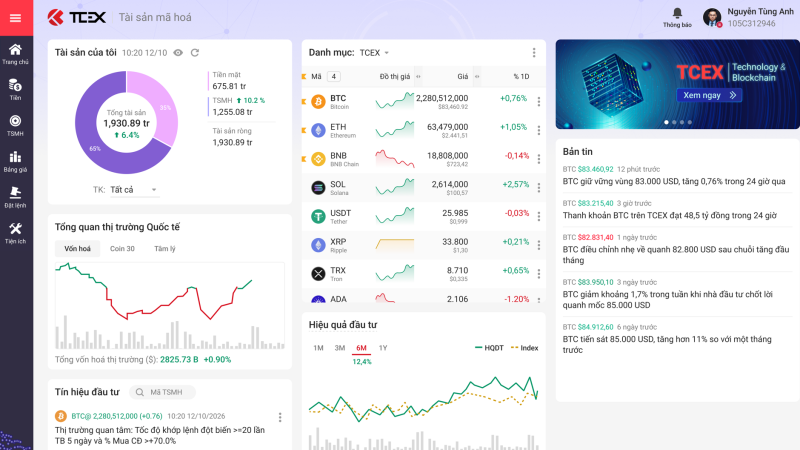
Speaking to TheLEADER, Mr. Ngo Duy Bien, General Director of TCEX, stated: “In digital finance, speed is crucial, but system security is the vital factor. Achieving Level 4 information system security certification is both a testament to our technological mastery and a reaffirmation of TCEX’s commitment from day one: prioritizing security and legal compliance.”
The CEO further emphasized that Level 4 is a mandatory foundation, not the ultimate goal. The unit is continuing to upgrade its system according to international standards such as ISO 27001, SOC 2, and CCSS, while simultaneously implementing four strategic priorities: protecting client assets, developing liquidity, providing investor education, and researching the cryptography of real assets.
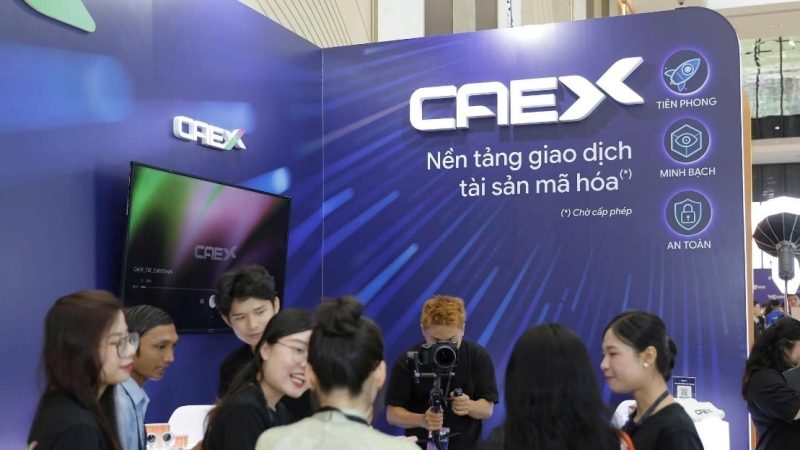
Concurring with this view, a CAEX representative stated: “We believe that trust in a cryptocurrency exchange must begin with system security, the ability to protect customer assets, and transparency in operations. Completing the Level 4 information security assessment is a significant milestone in CAEX’s journey.”
With its registered capital of 10,000 billion VND already fully contributed, and with the support of foreign partners, CAEX is continuing to refine its operational processes and capabilities to be ready to provide services as soon as a license is granted.
At SCEX, the company has also completed the increase of its charter capital to the minimum level of VND 10,000 billion as required by regulations. The exchange’s infrastructure is specially designed with a multi-tiered asset custody model, operated by a team of experienced personnel from the banking and securities sectors.
A SCEX representative affirmed: “We consider ‘safety and security’ a non-negotiable commitment. Completing the Level 4 due diligence is proof of SCEX’s thorough investment, ensuring that every investor participating in the market can have peace of mind regarding their assets.”
According to the pilot licensing procedure issued by the Ministry of Finance in Decision No. 96/QD-BTC dated January 20, 2026, completing the information security assessment means that the enterprise has reached the final steps in the pilot licensing process.
Specifically, the licensing process begins with the business submitting its application in step one, the regulatory agency receiving the application in step two, and then the Ministry of Finance reviewing and publishing the list of valid applications in step three. In step four, the entities must finalize their shareholder structure plan, demonstrate that they have contributed the full 10,000 billion VND in charter capital, and complete a level 4 information system security assessment with the Ministry of Public Security.
After completing this step, the exchanges only need to wait for the fifth and final step, where the Ministry of Finance, in coordination with the Ministry of Public Security and the State Bank of Vietnam, will review the entire dossier before officially granting the pilot operating license.
Previously, the regulatory agency identified five businesses with complete and valid documentation. This list includes: VIXEX, Vietnam Digital Asset Corporation, CAEX, SCEX , and TCEX.
The pilot launch date for the digital asset exchange is fast approaching.
The fact that three businesses have consecutively completed Level 4 technical due diligence indicates that the time for the pilot operation of the digital asset and cryptocurrency market is not far off.
Speaking to TheLEADER, a representative from an exchange said that the company is focusing all its efforts on completing the final preparations with the expectation of receiving a pilot license from the regulatory authority before the end of 2026.
Amidst the trend of exchanges aiming for early completion, Mr. To Tran Hoa, Deputy Head of the Standing Committee of the Cryptocurrency Trading Market Management Board, State Securities Commission (SSC), stated that the agency is closely coordinating with the Ministry of Public Security and the State Bank of Vietnam to review licensing conditions according to Resolution No. 05.
Mr. Hoa emphasized: “When we have the exchange will completely depend on the progress of the exchanges’ implementation. Therefore, if we consider the timeframe as starting from May of this year, then May of next year is the deadline for all exchanges.”
This timeline seems later than the Ministry of Finance’s initial expectations. Previously, Deputy Minister Nguyen Duc Chi had expressed a desire to pilot the market as early as the third quarter of 2026, aiming to bring digital asset transactions under management to ensure safety and transparency.
However, considering the region, Vietnam’s deployment speed is still considered fast. In Indonesia, the process from establishing the legal framework to the official opening of a cryptocurrency exchange took about 4 years. In Hong Kong, a similar roadmap also took 4-5 years to complete the synchronized system of supervision and investor protection.

According to Mr. Hoa, the pilot implementation of the digital asset market in Vietnam is being approached cautiously, given the rapid growth of the digital asset and cryptocurrency market in Vietnam. Data from Chainalysis shows that Vietnam consistently ranks among the world’s top countries in terms of the number of users and the popularity of digital assets.
The majority of current users are young people in major cities, with Ho Chi Minh City alone accounting for over 50% of the market share. This group of investors possesses both technological acumen and a certain level of financial knowledge.
The estimated trading volume in 2025 is approximately $220 billion. This figure demonstrates the potential of the domestic market and highlights the urgent need to consolidate trading activities on centralized exchanges under state management.
Regarding the list of assets permitted for trading, a representative from the State Securities Commission stated that Resolution No. 05 grants exchanges full authority to select the types of digital and crypto assets to list. The regulatory body encourages businesses to prioritize assets with high liquidity and widespread availability in the global market.
Regarding unlisted assets owned by individual investors, he affirmed that people can absolutely transfer them through licensed exchanges in Vietnam. After the transfer is completed, the exchanges are responsible for compiling data and reporting details to the relevant authorities in accordance with regulations.
The legal framework is gradually being perfected.
The caution of regulatory authorities stems from the complex nature of digital financial models. In preparation for the official pilot market launch, numerous legal documents have been issued recently, covering pilot mechanisms, licensing procedures, accounting, tax management, and penalties for violations.
Following Resolution No. 05/2025/NQ-CP issued by the Government on September 9, 2025, the Ministry of Finance issued Decision No. 96/QD-BTC to announce the licensing process for digital asset exchanges, while clearly defining the appraisal responsibilities of the Ministry of Finance, the Ministry of Public Security, and the State Bank of Vietnam.
On March 4, 2026, the Ministry of Finance issued Circular No. 15/2026/TT-BTC guiding the accounting regime for digital asset exchanges. This Circular stipulates standards for recognizing the value of digital assets, establishing risk provisions, and requires exchanges to separately account for assets owned by the enterprise and assets deposited by customers.
Next, the issue of tax obligations is guided by Circular No. 32/2026/TT-BTC, which provides guidance on value-added tax, corporate income tax, and personal income tax for business activities and transfers of digital assets.
On April 6, 2026, Circular No. 41/2026/TT-BTC was issued to further guide the process of declaring, deducting, paying, and settling taxes in the digital asset market.
Subsequently, the Government issued Decree No. 284/2026/ND-CP stipulating administrative penalties for violations related to digital assets. The Decree outlines penalty frameworks for acts such as providing services without a license, price manipulation, money laundering, failure to meet security standards, or delays in reporting obligations.
In the near future, the Ministry of Finance is expected to issue a Circular guiding certain aspects of reporting and information disclosure in the cryptocurrency market. The draft focuses on standardizing the mechanism for periodic and ad hoc reporting on liquidity, collateral reserve ratios, transactions with unusual characteristics, and the responsibility of exchange operators to publicly disclose their financial situation.(Vietnam Crypto Exchange)