
Vietnam Positioned to Become an Early Mover in the Tokenized Real-World Asset (RWA) Market
As global financial markets increasingly shift toward tokenizing traditional asset classes—including bonds, investment funds, private credit, and real estate—onto blockchain networks to boost operational efficiency and cross-border capital flows, Vietnam is building the foundation to become an early mover in the emerging Real-World Asset (RWA) sector.
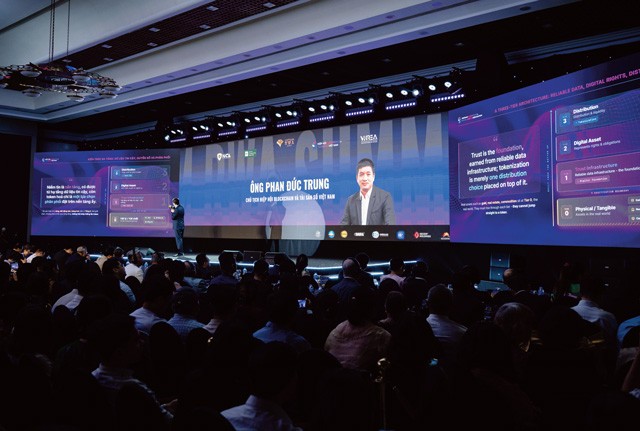
At the Vietnam RWA Summit 2026, jointly organized by the State Securities Commission of Vietnam, the Vietnam Blockchain Association (VBA), the National Cybersecurity Association, and the Vietnam National Real Estate Association, experts highlighted that Vietnam possesses a unique competitive edge to capture the global RWA wave, driven by a maturing regulatory framework, emerging blockchain infrastructure, and an active domestic user base.
Regulatory and Infrastructural Momentum
Industry leaders noted that Vietnam is accelerating its legal parameters for digital finance:
-
Legal Recognition: The Law on Digital Technology Industry (effective January 1, 2026) marks the nation’s first statutory framework formally recognizing digital and crypto assets.
-
Pilot Framework: Government Resolution No. 05/2025/NQ-CP sets forth rules for pilot digital asset markets, establishing guidelines for issuance, trading, and licensing. Meanwhile, the Ministry of Finance is finalizing complementary accounting, taxation, and reporting standards.
-
Financial Center Sandbox: Designated international financial hubs in Ho Chi Minh City and Da Nang are expected to serve as official sandboxes for fintech and digital asset ventures.
-
National Blockchain Infrastructure: Development is underway for the Vietnam Blockchain Service Network (VBSN), a multi-chain platform incorporating a domestically engineered Layer 1 blockchain designed for enterprise-scale asset transactions.
Balancing Efficiency Improvements with Risk Oversight
Dr. Can Van Luc, Chief Economist at BIDV and member of the National Financial and Monetary Policy Advisory Council, emphasized that RWA tokenization can unlock substantial value by lowering intermediary costs, enabling near-instantaneous settlements, and democratizing access through fractional ownership. Furthermore, automated smart contracts and transparent on-chain management foster financial inclusion.
However, Dr. Luc cautioned that tokenization introduces complex risks requiring rigorous oversight:
-
Legal disputes and property claim resolutions.
-
Cybersecurity vulnerabilities and price volatility.
-
Anti-money laundering (AML) and counter-terrorist financing (CTF) concerns.
-
Fraudulent issuance without verifiable backing assets, alongside valuation and counterparty risks.
Because RWA markets interact directly with the broader financial ecosystem, Dr. Luc called for a comprehensive, transparent regulatory framework backed by strong risk mitigation mechanisms to guarantee financial stability.
Trust over Technology: Building Verifiable Data Systems
Mr. Phan Duc Trung, Chairman of the Vietnam Blockchain Association, observed that the core of RWA tokenization is transforming legal ownership rights of tangible economic assets into blockchain-based digital tokens.
He stressed that the primary hurdle facing the sector is not the underlying blockchain technology, but trust. Drawing on findings from international bodies such as the BIS, IOSCO, and OECD, Mr. Trung outlined four mandatory pillars required before an asset can be reliably tokenized:
-
Verified Asset Data: Unalterable proof of underlying physical or financial assets.
-
Verifiable Identities: Clear legal authentication of all participating market entities.
-
Claim Validation: Robust legal mechanisms to validate rights to assets and cash flows.
-
Continuous Oversight: Transparent, real-time disclosure and monitoring protocols.
Strategic Roadmap for Implementation
To safely scale the market, experts recommend a phased approach for Vietnam:
-
Phase 1: Prioritize the establishment of trusted data infrastructure (such as the Ministry of Public Security’s legal framework for digital identity and electronic authentication) to ensure identity and transaction verifiability.
-
Phase 2: Accelerate enterprise digital transformation to cultivate high-quality, real-economy assets suitable for tokenization.
-
Phase 3: Scale up full-fledged tokenized market operations once institutional trust and verification layers are firmly established.
Major General Dr. Ho Van Huong, Deputy Chief of the Government Cipher Committee, concluded that safeguarding digital assets, data integrity, and encryption infrastructure is essential not only for technical resilience, but also for preserving national digital sovereignty and fostering public trust in Vietnam’s evolving digital economy.