
CAEX, SCEX, and the race to license cryptocurrency exchanges
CAEX and SCEX are attracting attention in the race to prepare for the licensing of the cryptocurrency market in Vietnam. According to Blockhay’s analysis, CAEX has the advantage of capital scale and international cooperation, while SCEX has already implemented a simulated trading platform. However, which company will be licensed first still depends on the assessment results of the regulatory authority.
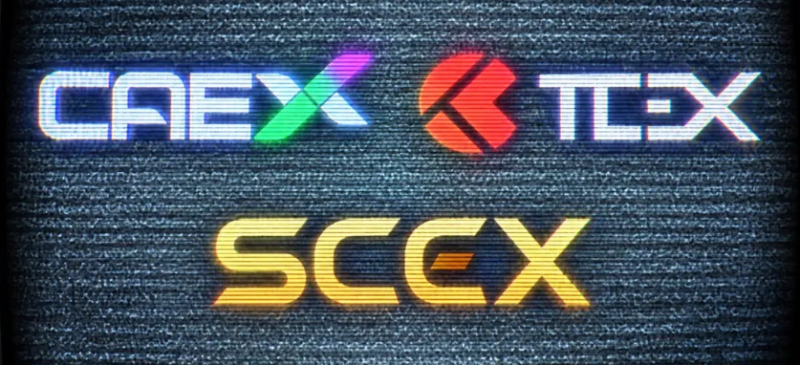
Five companies are under scrutiny in the licensing race.
Government Resolution 05/2025/NQ-CP sets out a framework for piloting the cryptocurrency market in Vietnam for a period of 5 years.
Under this mechanism, the number of organizations licensed to provide cryptocurrency services during the pilot phase is limited. Businesses wishing to participate must meet requirements regarding capital, shareholders, personnel, technology, and operational processes.
In its analysis of the potential licensing of the first cryptocurrency exchange, Blockhay mentions five companies:
- CAEX: Vietnam Prosperity Cryptocurrency Exchange Joint Stock Company, affiliated with the VPBank ecosystem.
- SCEX: Sacom Cryptocurrency Exchange Joint Stock Company, which collaborates with domestic financial institutions.
- TCEX: A company developing a cryptocurrency platform integrated with the Techcom ecosystem.
- VIXEX: A business in which VIX Securities Company and its partners participate.
- Vietnam Digital Assets Joint Stock Company: A company mentioned for its involvement within the Sun Group ecosystem.
These are businesses that are being monitored by the media as they prepare to enter the market. Appearing on this analysis list does not mean that all of them have been confirmed to have valid applications or have been approved for licensing.
CAEX has attracted attention due to its charter capital of 10,000 billion VND.
According to data compiled by Blockhay, CAEX increased its charter capital from VND 25 billion to VND 10,000 billion in April 2026.
This is a significant capital milestone because Resolution 05/2025/NQ-CP stipulates that organizations registering to provide cryptocurrency trading market services must have a minimum contributed charter capital of 10,000 billion VND.
However, meeting the capital requirement is only part of the licensing process. Businesses must also meet standards regarding shareholder structure, management personnel, information technology systems, security, and risk control.
International cooperation and the VPBank ecosystem
Another factor highlighted by Blockhay is the collaborative relationship between CAEX and international partners in the cryptocurrency sector.
The article mentions OKX’s participation in CAEX with a 10.6% ownership stake. This information needs to be cross-referenced with the latest shareholder records and company disclosures when assessing the actual ownership structure.
CAEX is also linked to the VPBank ecosystem, which includes VPBankS Securities Company and LynkiD.
Having financial and technology partners can support businesses in building trading systems, managing accounts, and developing compliance processes.
Nevertheless, the system’s banking integration capabilities, transaction processing speed, and security level still need to be evaluated based on testing, certification, and real-world performance.
SCEX has launched a simulated trading platform.
While CAEX is notable for its capital scale, SCEX has a more interesting practical activity: the development of the SCEX Simulator platform.
This system allows participants to practice trading digital assets in a simulated environment, without using real money or cryptocurrency.
The SCEX Simulator was previously introduced in the Digital Asset Inclusion Program 2026, with each participant being given 1 billion VND in simulation capital to experience it.
Having a testing platform allows businesses to gather feedback and test user experience before officially launching a service.
However, a simulation system is not proof that the exchange has fully met the requirements for liquidity, asset custody, or operational security in a real trading environment.
Registered capital and identification infrastructure
According to Blockhay, SCEX has increased its charter capital to VND 5,000 billion and developed cooperation activities related to banking, payments, and electronic identification.
The article also discusses the possibility of using chip-embedded ID cards and VNeID in the user authentication process.
Electronic identification is a crucial part of KYC (Know Your Customer) and anti-money laundering processes. However, integrating authentication tools does not mean the risk of identity fraud or illegal transactions can be completely eliminated.
With the aforementioned capital of 5,000 billion VND, SCEX still needs to meet the minimum capital requirements if it registers to provide services for organizing cryptocurrency trading markets.
Where do TCEX, VIXEX, and Vietnam’s digital assets stand now?
Besides CAEX and SCEX, Blockhay also mentioned the preparation status of three other businesses.
TCEX and the Techcom ecosystem
TCEX is mentioned in connection with Techcom Capital and Techcom Securities Company.
According to the data in the analysis, the company’s charter capital was approximately 101 billion VND at the time of the survey.
Without a new capital raise, this is a significant gap compared to the minimum capital requirement for organizations operating cryptocurrency trading markets.
VIXEX and its domestic partners
VIXEX is a joint venture between VIX Securities Company and its partners FTG and 3C.
Blockhay noted VIXEX’s charter capital at VND 1,000 billion and stated that it had not seen the test platform publicly announced at the time of writing.
The fact that a prototype hasn’t been released to the public doesn’t mean the company hasn’t developed an internal system. The level of technological maturity should be assessed based on published information or specific evaluation results.
Vietnam Digital Assets Joint Stock Company
This company was mentioned by Blockhay in connection with the Sun Group ecosystem.
According to the analysis, the registered capital is recorded at VND 1,000 billion. Detailed information regarding the trading platform, technology partners, and preparation progress has not been fully presented by the source.
Therefore, there is insufficient publicly available data to comprehensively assess the company’s ability to meet the licensing requirements.
Could CAEX and SCEX be licensed first?
In the article, Blockhay presents two predicted scenarios for the first licensing round.
Scenario 1: CAEX and SCEX are both licensed in the initial phase, thereby forming two operating units to create competition in the market right from the start.
Second scenario: The regulatory authority grants a license to one entity first, with CAEX being assessed by Blockhay as having an advantage due to its registered capital and technological and financial partnerships.
It should be noted that these are scenarios analyzed by Blockhay, not official announcements or licensing plans from the Ministry of Finance .
The decision to grant a license must be based on the submitted application and fulfillment of the stipulated conditions. Large registered capital, international partners, or the implementation of a pilot platform do not automatically guarantee that a business will be granted a license.
Information to watch in the coming period.
Instead of relying solely on capital size or predicting which entity will be selected first, there is a number of data points to track in order to assess the progress of each business’s preparation.
- Changes to the charter capital and shareholder structure have been officially announced.
- Information regarding the application and licensing results from the regulatory authority.
- Progress in building, testing, and evaluating the safety of the technology system.
- The banking, custody, and payment cooperation agreements have been confirmed.
- Customer asset management, KYC, and anti-money laundering processes.
Until official licensing is announced, any predictions about Vietnam’s first cryptocurrency exchange should still be considered speculative.
Information about each business also needs to be updated regularly, especially registered capital, shareholders, and implementation progress, as this data can change during the process of preparing to enter the market.(Vietnam Crypto Exchange)