
Competitive advantages of Vietnamese digital asset exchanges over foreign exchanges

The digital asset market in Vietnam is entering a crucial transitional phase as the regulatory framework is gradually becoming clearer. For many years, the majority of domestic users have been familiar with international trading platforms due to their diverse portfolios and abundant trading volumes.
Nevertheless, the emergence of domestic digital asset exchanges is creating new changes, offering fundamental structural advantages that foreign entities would find difficult to match.
Eliminate the risk of account freezing thanks to standardized payment infrastructure.
One of the biggest obstacles for investors using cross-border platforms lies in the peer-to-peer trading method between individuals. Participants are forced to transfer funds directly to other personal accounts without being able to verify the source of the money.
In reality, there have been numerous cases where users have inadvertently received funds generated from fraudulent or money laundering activities, leading to their personal bank accounts being frozen by authorities for investigation purposes. This situation causes significant disruption to daily life and creates anxiety for those who own the funds.
In contrast, domestic exchanges possess the ability to connect directly to the interbank payment system and the national financial switching network. All transactions for depositing or withdrawing Vietnamese Dong are automated through electronic scan codes or clearly identified transfers. This process completely eliminates the interference of anonymous intermediaries, ensuring that investors’ funds remain safe, transparent, and separate from any illegal financial sources.
A strong legal shield protects investors’ rights.
Most international exchanges today are legally registered in island nations or offshore territories with preferential tax policies. This often comes with terms of service requiring dispute resolution through international arbitration centers, which are extremely costly.
Furthermore, in the event of technical issues, account disputes, fraud, or even the risk of the platform ceasing operations, individual users in Vietnam are almost completely unable to protect their legitimate rights.
Conversely, digital asset exchanges established in Vietnam are directly regulated by the current legal system. In the event of unforeseen incidents, investors can request support and intervention from local government agencies.
The presence of a legal representative and a support team fluent in Vietnamese helps to expedite the complaint handling process, providing a solid foundation of peace of mind for the participating community.
Standard identification and integration with traditional finance.
Identity verification has always been a barrier for many people when accessing new technology services. International systems often apply automated verification standards requiring bilingual documents or bank statements, leading to a relatively high rejection rate.
Meanwhile, domestic exchanges can integrate directly with the national electronic identification database to accurately identify customers. This solution simplifies the account opening process for citizens while effectively preventing the problem of fake accounts or automated tools that manipulate the market.
Beyond simply trading cryptocurrencies, the domestic platform also has the opportunity to establish deep connections with commercial banks, securities companies, and reputable investment funds. This combination paves the way for the digitization of real-world assets, providing digital fund certificates and diverse financial accumulation solutions.
Furthermore, the mechanism for automatically calculating and deducting tax obligations in a transparent manner helps investors fulfill their civic responsibilities without worrying about the risks of future tax arrears.
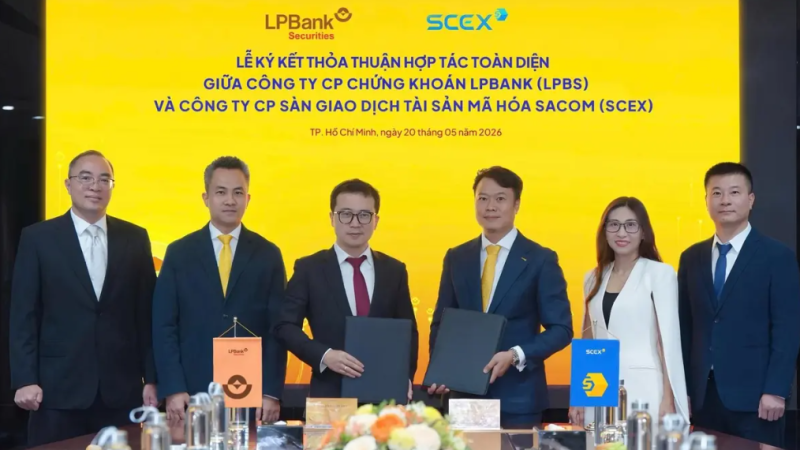
LPBank Securities and SCEX exchange sign comprehensive cooperation agreement. Photo: Google
The liquidity challenge and the roadmap to establishing a long-term position.
Operating within a controlled testing framework helps domestic entities maintain continuity and stability in their operations. Domestic platforms do not face the risk of network access blocking, domain name blocking, or restrictions on bank payment gateways, unlike many unregistered foreign applications. Close collaboration with authorities enables fintech businesses to proactively adapt to the policy development roadmap in Vietnam.
Despite possessing significant strategic advantages in terms of legal framework and capital security, domestic exchanges still face major challenges regarding liquidity depth and portfolio diversification. Changing long-established trading habits requires domestic platforms to continuously upgrade their technological experience, improve services, and sustainably expand their market size.(Vietnam Crypto Exchange)