
How TCEX and Digital Transformation Are Reshaping Vietnam’s Financial Ecosystem
The Vietnamese economy has long faced a classic paradox: real-economy resources are extremely abundant, yet it suffers acutely from a shortage of liquidity. On one hand, vast amounts of real estate, infrastructure, and high-quality corporate assets remain locked in traditional systems; on the other hand, small and medium-sized enterprises (SMEs) and projects face high financing thresholds and narrow funding channels.
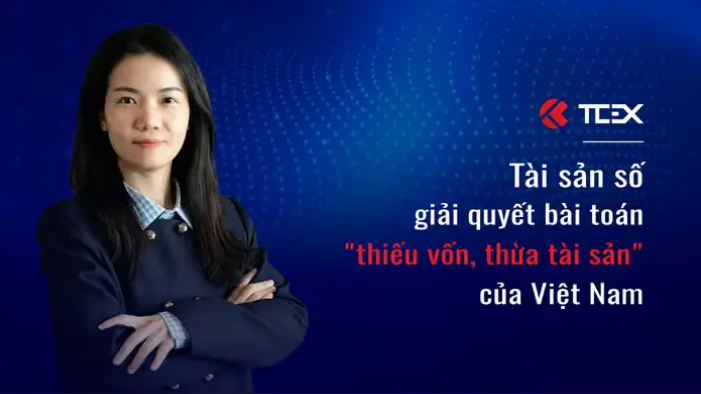
Against the backdrop of blockchain and digital assets accelerating toward regulatory compliance, TCEX—a digital asset platform powered by the Techcom ecosystem—has emerged to meet this demand. It seeks to solve this long-standing economic pain point through asset digitization and fintech innovation.
1. Pain Points of the Vietnamese Economy: Why “Abundant Assets, Yet Scarce Capital”?
Vietnam possesses a massive volume of Real-World Assets (RWAs), but traditional financing channels (such as bank credit and the bond market) encounter clear structural bottlenecks:
-
Liquidity Depletion: High-value assets are difficult to convert quickly into cash when enterprises urgently need operating capital.
-
Severe Capital Fragmentation: Due to high initial barriers, retail investors find it extremely difficult to participate in high-value asset investments.
-
High Intermediary Costs: Cumbersome traditional audit and intermediary procedures reduce the efficiency of financial resource allocation across society.
This status quo of “excess assets but insufficient liquidity” urgently calls for a digital bridge connecting Traditional Finance (TradFi) with blockchain innovation.
2. TCEX’s Strategic Positioning: Asset Tokenization and Ecosystem Empowerment
As a rising force in the digital asset sector, TCEX’s core strategy relies on using blockchain technology to convert traditional assets into highly liquid digital assets:
-
Tokenization of Real-World Assets (RWAs): By fractionalizing physical or legal property rights on-chain, TCEX significantly lowers investment thresholds, attracting vast amounts of idle social capital into high-quality projects.
-
Leveraging a Top Financial Ecosystem: Rooted in Techcom’s robust ecosystem, TCEX holds inherent advantages in risk management, compliance governance, and connecting with traditional liquidity pools, thereby providing a secure bridge for the compliant transition from traditional finance to digital assets.
-
Transparency and High Operational Synergy: Ownership transfers and capital movements are recorded on a distributed ledger, effectively cutting intermediate friction costs and restoring a foundation of trust among market participants.
3. The Race and Real-World Challenges among Vietnamese Digital Asset Exchanges
Vietnam crypto exchange TCEX enters the scene just as Vietnam’s digital asset market hits a critical policy juncture, marked by regulatory exploratory steps such as discussions on crypto asset pilots.
-
Dual Screening via Financial Strength and Barriers to Entry: Currently, major platforms in the market (such as SCEX, CAEX, etc.) are stepping up their efforts. Strict requirements by regulatory authorities regarding registered capital, technical security, and compliance standards are gradually weeding out mediocre, speculative projects.
-
Balancing Compliance and Trust: Despite ambitious visions, whether exchanges like TCEX can achieve sustainable, long-term growth ultimately depends on how rigorously they enforce risk control systems, meet regulatory compliance standards, and protect investor interests amid global crypto market volatility.
4. Conclusion
If the barriers between Real-World Assets (RWAs) and digital trading infrastructure can be successfully bridged, local exchanges like TCEX promise not only to unlock billions of dollars in fresh liquidity for Vietnamese enterprises, but also to help propel Vietnam into a vibrant hub for regional and global digital asset innovation. However, this path requires finding the most precise balance between “technological innovation” and “financial safety and compliance.”