Operational Concept of Real-World Asset (RWA) Tokenization on the TCEX Exchange
The core concept of Real-World Asset (RWA) tokenization on the TCEX platform is to “convert the value, ownership, or revenue rights of off-chain real-world assets into digital tokens on the blockchain, enabling liquidity within the exchange.”
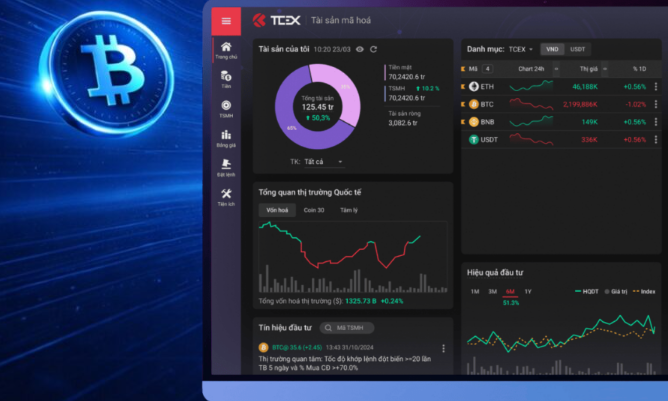
Vietnam crypto exchange TCEX’s entire operation process can be broken down into the following four core stages:
1. Asset Selection & Legal Structuring (Off-Chain Preparation)
-
Real Asset Selection: Screening off-chain assets with stable value or yield potential (e.g., real estate, commodities, private debt, or high-dividend assets).
-
Establishing an SPV (Special Purpose Vehicle): Creating an independent legal entity to hold the asset, establishing a bankruptcy-remoteness mechanism. The underlying asset is typically held by a compliant third-party custodian or trustee.
2. On-Chain Assetization & Token Minting (On-Chain Generation)
-
Fractionalization & Tokenization: Leveraging smart contracts to split high-value assets into countless micro-units (e.g., dividing a property worth millions of dollars into 100,000 tokens).
-
Rights Binding: Embedding underlying rights into smart contracts, including yield distributions (such as rental income) or terminal liquidation rights for token holders.
3. Compliance Verification & 24/7 Liquidity Trading (Exchange Matching)
-
Identity & Eligibility Verification (KYC/AML): Buyers must complete identity verification on TCEX to meet regional regulatory requirements and accredited investor standards before participating.
-
High-Liquidity Order Matching: Via the TCEX matching engine, investors can trade traditionally illiquid physical assets anytime with a low entry barrier (e.g., starting from 10 USDT).
4. Oracle Data Synchronization & Yield Distribution (Ongoing Operations)
-
On-Chain Oracles: Integrating decentralized oracles like Chainlink to update the Net Asset Value (NAV) and Proof of Reserves (PoR) of off-chain assets on-chain in real time.
-
Automated Yield Distribution: Yield generated by the asset (such as interest or rent) is automatically distributed periodically to token holders in stablecoins (e.g., USDT/USDC) via smart contracts.